
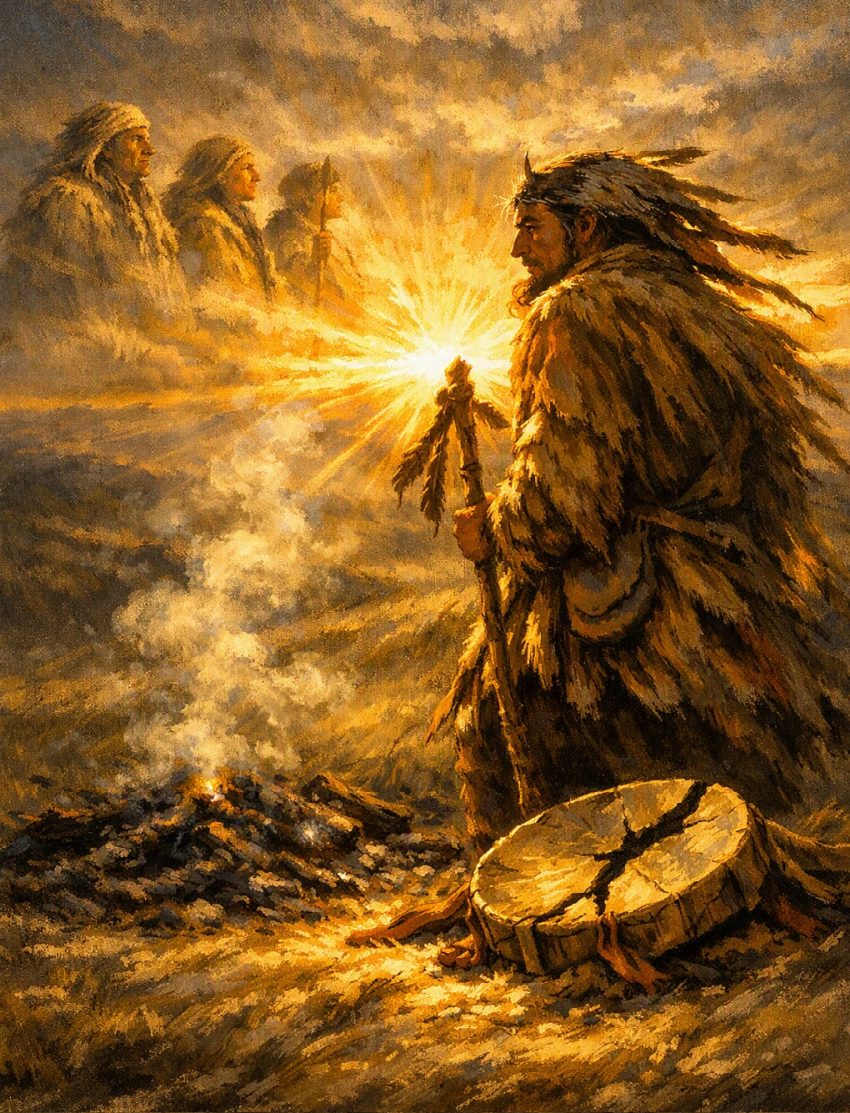
Blame and the Human Energetic Psyche (MP3 below)
You can only take responsibility for what you add to the group psyche, and contribute to what your small group does or doesn’t add.
Edited transcript
On Blame, Hiding, and Ancestral Healing
Welcome. We want to share some clarity with everyone in our community at AncestralMedicineWomen.com and WildPlainsMedicine.com.au
We are discussing blame and how it creates problems in families and ancestral lines, generating swirling confusion.
Blame as Protection
Blame is often about hiding—hiding a situation, hiding a person, or hiding something that needs to remain concealed. Though it might seem counter-intuitive, blame is fundamentally about protection: protecting someone or something that feels vulnerable. What’s being protected then gets blamed onto a person, group, or institution that’s perceived as expendable or capable of bearing the burden.
This is what makes blame so insidious. You have three distinct layers:
- The hidden thing or situation and those directly hiding it
- The person, group, or institution being blamed
- The wider group that are both complicit with, and facilitating, the hiding
When we view this through an ancestral lens—understanding “ancestral” not as a single lineage but as the ancestral groups of that historical time and what has informed them—we see how all three layers are implicated across generations. Not just one ancestral line is involved, but many.
The Wider Group’s Burden
Then there’s the wider community: those who either believe in the blame, or who don’t believe it but go along with it for various reasons. They maintain the status quo, avoid exposure, don’t risk being blamed themselves. This middle group actually carries multiple energies simultaneously. If you’re embedded in the community, you may be more affected than those actively blamed, because you’re holding both the energy of wanting to avoid victimization and the energy of actively participating in the hiding. These situations tend to involve things of significant magnitude—not just in communities and societies, but even within families.
The Ripple Through Generations
Even in a small family microcosm of four or five people, you can see how this expands into descendants. Those being blamed carry an injustice that was never theirs. Those who committed the harm or know of it carry hidden guilt. And the community group—those going along without speaking up—carry the weight of that complicity.
When these people move out into the broader community, all of that is carried in their interactions. Their behavior is imbued with it and influences everyone around them. This is how blame patterns ripple through communities and generations.
The Whistleblower’s Path
Being the black sheep or whistleblower is fraught. You’re carrying the energy of those wanting to hide, wanting to maintain the status quo, wanting to stay quiet. But the reality is: people have seen. People do know. It’s not actually hidden. The hiding is only in the willingness to ignore what’s already visible.
This is a difficult and often thankless role. Humans need recognition; they need to be told they’re doing the right thing, even when they sense it. But recognition often doesn’t come in this lifetime. What actually happens is realized in the future—for subsequent descendants and communities, for families. That’s the achievement: the future generations don’t carry it anymore.
You may suffer in this lifetime, yes. But you may also have come here knowing this needed to be cleaned up. You felt something was there. As you’ve gotten older and seen more, information comes to you that doesn’t come to others. Why? Because you’re more determined, more aligned to making the change happen for your group. In this sense, you’re a leader.
Why This Work Matters
It’s difficult. It can be uncomfortable and unpleasant. In most cases, you won’t get accolades or acknowledgement. But if that’s why you’re doing it, you need to rethink your motivation. Because this work isn’t just for you.
When something changes in one ancestral line, it impacts many—much of humanity, in fact. It goes into the fabric of the human energetic psyche. It brings a new way of thinking into the world.
Here’s what’s important to understand: you’re here for humanity, not just for yourself. Your contribution to humanity is that you’re adding information to the human psyche and the energetic of the planet, the solar system, the universe we all inhabit. When you realize this, you have to consider what information is being placed into that collective psyche and what it will inform in the next generation, and the next, and the next.
A Shift in Consciousness
At some point, the human group needs to reach a point of saying “this is enough.” Not through obliteration of groups or countries, not through abandoning technology or money—but through energetic development to a place where we collectively say: we cannot continue like this. How do we move forward without breaking all the systems currently keeping us going?
This is a vast mystery. It’s not impossible, but it requires a fundamental shift in how people see themselves and their role.
It starts here: knowing that what you contribute now goes into the human energetic psyche. That’s what will inform the future.
What Can You Do Now?
You don’t need governments to make these rules. You don’t need weapons or external structures. You need people to start looking at themselves and seeing their part in everything.
You can say you dislike this government or that action, but if you don’t do anything about it, you’re complicit. You’re allowing it to happen.
When someone asks “What can one person do?” this is what you can do: Look at what you’re contributing to the human energetic psyche for the future. Don’t focus on what you can’t do now. Focus on what you can do now to improve that legacy. Don’t worry about outcomes in your lifetime. Worry about what you’re putting out there—what you’re thinking, feeling, and expressing—because that’s what the future will draw from.
That’s where it starts.
Warm regards,
Brad, Caroline and the Mothers.
Podcast: Play in new window | Download (Duration: 22:22 — 21.7MB)